 Meridian Palate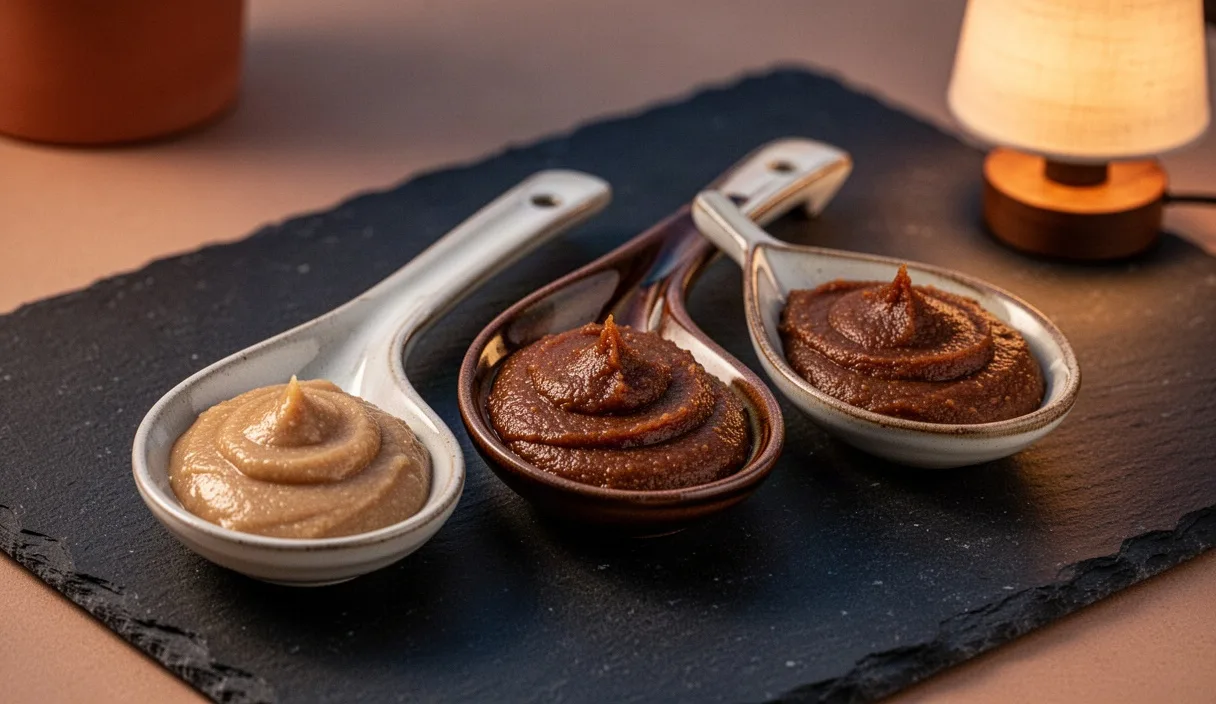

Standing in front of the refrigerated wall at an Asian grocery store can feel like a test you forgot to study for. Rows of square plastic tubs display pastes in shades ranging from pale flaxen to deep mahogany, with labels that offer minimal guidance beyond the brand name and a broad color category. To many cooks, miso is simply the salty, cloudy broth that arrives alongside a sushi combo, but in the home kitchen, it functions more like a seasoned dairy butter or an aged hard cheese: an everyday foundation built on moisture, salt, grain, and time.
Every tub of miso traces its lineage to the same basic formula: cooked soybeans, salt, and grain inoculated with the mold culture Aspergillus oryzae, known as koji. The differences in color, flavor, and culinary utility arise from how those ingredients are balanced and how long the fermentation crock sits undisturbed. Learning how the short-ferment white pastes differ from the multi-year dark pastes gives you immediate control over salt levels, umami depth, and sweetness across sauces, soups, and marinades.
What Happens During Soybean and Koji Fermentation
The transformation of hard, unpalatable soybeans into a complex paste depends entirely on koji. Koji is typically steamed rice, barley, or soybeans that have been inoculated with Aspergillus oryzae spores and incubated in a warm, humid environment for roughly 48 hours. During this propagation window, the mold produces an army of hydrolytic enzymes, notably proteases and amylases. When the koji is mashed with cooked soybeans, water, and salt, these enzymes begin breaking down tough vegetable matter into its fundamental chemical building blocks.
Amylase enzymes cleave long, tasteless carbohydrate chains into simple sugars, primarily glucose, which gives young miso its distinct sweetness. At the same time, protease enzymes dismantle soybean proteins into peptide chains and free amino acids, most notably glutamic acid. Glutamic acid is the compound responsible for savory umami, the deep, mouth-filling sensation that makes broths satisfying. Salt plays the defensive role in this micro-ecosystem: by maintaining a salinity typically between 5% and 13% by weight, it prevents putrefying bacteria from colonizing the mash while allowing salt-tolerant yeasts and lactic acid bacteria to thrive.
As the mash ages over weeks or years, a slow chemical development known as the Maillard reaction takes place. This is the same non-enzymatic browning reaction that gives seared steak its crust or freshly baked bread its color, except here it occurs at cellar temperature over months instead of in a skillet over minutes. The free amino acids react with the simple sugars, producing dark pigments called melanoidins alongside hundreds of new aromatic compounds. A paste that starts as a pale, cream-colored mash steadily darkens to tan, russet, and eventually chocolate brown, shifting the flavor profile from bright and sweet to roasty, earthy, and mineral.
White Miso (Shiro): Sweet Notes and Short Fermentation
White miso, or shiro miso, sits at the gentlest end of the spectrum. Originating primarily from the Kansai region around Kyoto, shiro miso is made using a heavy ratio of white rice koji to soybeans, often two parts koji or more to one part beans. It is mixed with a relatively low salt concentration, usually hovering around 5% to 7% by weight. Because there is less salt to slow down microbial action, the fermentation process moves quickly and is typically halted after three to twelve weeks.
The short aging timeline means the Maillard reaction barely gets started, leaving the paste a soft beige or pale yellow. Because the amylase enzymes rapidly turn the abundance of rice starch into glucose without an extended period for bacteria to consume those sugars, shiro miso has a distinctly sweet, creamy, almost buttery profile. It carries minimal funky aroma, tasting clean and mild with a mild saline baseline.
In cooking, shiro miso functions best when treated as an emulsion builder or a delicate seasoning base rather than a heavy stew broth. Its natural sweetness makes it the classic choice for sweet marinades, light salad dressings, and sauces where you want savoriness without aggressive soy character. If you are substituting it in a Western recipe, you can think of it acting similarly to a splash of heavy cream mixed with a pinch of sea salt.
- Glazes: Whisk with mirin, sake, and a touch of sugar to brush over black cod, salmon fillets, or sliced Japanese eggplant before broiling.
- Dressings: Combine with rice vinegar, toasted sesame oil, and grated ginger for a light, clinging dressing on tender greens.
- Purees and Spreads: Blend straight into softened butter for finishing steamed corn, or swirl into cauliflower soup for dairy-free body.
Yellow Miso (Shinshu): The Versatile Kitchen Middle
If a recipe calls simply for "miso" without specifying a shade, yellow miso is usually what the developer had in mind. Often categorized as shinshu miso, named after the historic Shinshu province in modern-day Nagano Prefecture, this style strikes a calculated balance between grain sweetness and soybean savoriness. It is commonly produced with roughly equal proportions of rice koji and soybeans, seasoned with an intermediate salt content of around 8% to 11%.
Yellow miso ferments longer than white paste, typically spending between three and nine months in fermentation tanks. This extra time allows the enzymes to digest more starches and proteins, while the low-temperature Maillard reaction gradually shifts the color toward a sandy mustard yellow or warm light brown. The sugars that dominated the white paste are partially converted by wild microbes into mild organic acids, giving yellow miso a lightly tangy edge that keeps the savory saltiness balanced.
Yellow miso is arguably the most adaptable tub in the refrigerator. It possesses enough body and salt to stand up to root vegetables and poultry, but lacks the intense, fermented earthiness that might overpower tender fish or summer squash. A single spoonful can season a simple dashi stock for weekday soup, or dissolve into an everyday pan sauce for pan-roasted pork chops without turning the liquid muddy.
| Variety | Primary Grain Koji | Average Aging Time | Salt Content (by weight) | Best Applications |
|---|---|---|---|---|
| White (Shiro) | White rice (high ratio) | 3 to 12 weeks | 5% to 7% | Fish glazes, dressings, butter spreads, light sauces |
| Yellow (Shinshu) | White or brown rice | 3 to 9 months | 8% to 11% | Everyday miso soup, poultry marinades, roasted root vegetables |
| Red (Aka) | Barley, rice, or 100% soybean | 1 to 3 years | 10% to 13% | Braised short ribs, beef stews, rich winter broths, compound glazes |
Red Miso (Aka): Long Fermentation for Hearty Dishes
Red miso, or aka miso, represents the deeper, bolder expression of fermentation craft. While some varieties use rice koji or barley koji, others, such as the famous hatcho miso from Aichi Prefecture, bypass cereal grains entirely and use koji made exclusively from soybeans. Soybeans contain higher protein and lipid levels than rice, which leads to dense collections of amino acids and fatty acid breakdowns as the mash matures. Aka miso uses a firm salt level, frequently reaching 12% to 13%, which keeps spoilage microbes at bay across very long aging cycles.
Fermentation for aka miso lasts anywhere from one full year to three years, sometimes even longer in traditional cedar vats weighted down with heavy river stones. Over this extended period, melanoidin production runs its course, staining the paste a dark reddish-chestnut or nearly black hue. The flavor profile shifts dramatically: the sweetness of simple sugars drops away, replaced by an astringent, mineral, and roasted profile reminiscent of dark cocoa, dried mushrooms, and aged soy sauce.
Because of its robust character and elevated sodium content, aka miso requires thoughtful handling. If used in the same quantity as white miso, it will quickly turn a delicate soup brackish and muddy. However, when paired with rich fats, braised meats, or robust root crops, it acts as an anchor. A tablespoon whisked into a slow-cooked beef stew, a pot of braised cabbage, or a reduction sauce for duck breast introduces a grounding, savory depth that cannot be replicated with salt or soy sauce alone.
Temperature Control: Why Boiling Ruptures Miso Flavor
The single most common error cooks make with miso is treating it like an ordinary broth paste, dropping it into bubbling liquid and letting it simmer vigorously. Miso is a living, enzyme-rich condiment. Boiling it at 100 degrees Celsius (212 degrees Fahrenheit) immediately deactivates the beneficial enzymes, degrades delicate aromatic compounds, and causes the protein solids to separate from the liquid, producing a grainy, split broth with a harsh, one-dimensional salt bite.
To capture the full spectrum of floral, toasted, and lactic aromas, miso must be incorporated off the heat or at a gentle simmer below 80 degrees Celsius (175 degrees Fahrenheit). The paste should never be dropped directly into the pot in a solid clump. Dense miso dissolves poorly in bulk liquid and will sit at the bottom of the pot, creating localized scorching and salty pockets.
The professional method for dissolving miso utilizes a fine-mesh strainer and a set of cooking chopsticks or a small whisk. Follow these steps to introduce the paste properly:
- Take your pot of dashi, broth, or braising liquid off the direct flame once the vegetables or proteins are fully cooked.
- Ladle roughly 120 milliliters (half a cup) of the warm cooking liquid out of the pot into a small bowl or directly into a fine-mesh strainer held submerged in the surface of the pot.
- Measure your miso paste into the strainer or bowl. Using chopsticks, a spoon, or a mini whisk, stir the paste against the mesh or in the small bowl until it forms a smooth, fluid slurry.
- Stir the fully dissolved slurry back into the main pot, distribute evenly with a gentle swirl, and serve immediately. Do not return the pot to a rapid boil.
Refrigerator Storage and Preventing Dry Surface Crust
Thanks to its significant salinity and active microbial cultures, miso paste has an exceptionally long shelf life, but it is not impervious to air. Oxygen is the primary enemy of stored miso. When exposed to ambient air in the refrigerator, moisture evaporates from the upper layer, leaving behind a hard, discolored crust. Simultaneously, prolonged exposure to oxygen causes the surface fats to oxidize, producing a stale, metallic off-flavor.
Upon opening a new plastic tub of miso, you will typically find a thin sheet of parchment or waxed paper and a small packet of oxygen absorber resting on top of the paste. Discard the oxygen absorber, but do not throw away the protective concept. Once you scoop out the portion needed for your recipe, use a clean silicone spatula to press the remaining paste down flat, eliminating internal air pockets.
Next, press a piece of plastic wrap or parchment paper directly against the surface of the paste, smoothing it out toward the tub edges to form a tight, airtight seal before closing the rigid plastic lid. Stored this way in a standard refrigerator set to 3 degrees Celsius (38 degrees Fahrenheit), white miso will easily maintain its fresh, sweet profile for up to nine months, while yellow and red miso can safely reside on your door shelf for well over a year. If you purchase bulk quantities, miso can also be stored in the freezer; because of its high salt and low water content, it will not freeze solid, allowing you to spoon out what you need directly from the container.
Common Mistakes When Cooking with Miso
Working with fermented soybean pastes becomes much easier once you avoid three classic pitfalls that catch home cooks off guard:
- Substituting across colors at a 1:1 ratio: Swapping aka miso directly for shiro miso in a recipe will result in an unpleasantly salty, overly assertive dish. If a recipe calls for white miso and you only have red, cut the measurement by half, dilute it with a splash of water, and add a small pinch of sugar or mirin to balance the missing sweetness.
- Seasoning the pot before tasting: Miso carries a hefty sodium load. If you add your usual pinch of kosher salt to onions, aromatics, or simmering broth before stirring in the miso, the finished dish will almost certainly cross the threshold into over-salting. Hold all supplemental salt until after the paste has been incorporated and tasted.
- Adding miso at the start of a long braise: While a tiny spoonful can be used to brown meat, dissolving your full measure of miso into a liquid that will simmer for three hours destroys the nuanced fermentation notes. Add only a baseline amount early if needed for deep braising, then stir in a fresh tablespoon right before serving to restore vibrant aroma.
Practical Next Steps for Your Pantry
If your refrigerator is currently empty of miso, begin by purchasing a modest 400-gram container of yellow (shinshu) miso. It offers the broadest working safety margin, allowing you to tackle clear broths, salad dressings, and poultry marinades without needing a separate tub for each technique. Check the ingredient label: ideally, it should list only soybeans, rice, salt, and koji culture. Some commercial brands add alcohol (ethanol) as an antimicrobial preservative to prevent containers from swelling during transit; this is safe and common, though unpasteurized versions without alcohol often provide slightly cleaner flavor.
For your first kitchen application, set aside complicated soup recipes and try using a teaspoon of paste as a background seasoning in everyday Western food. Whisk a tablespoon of yellow miso into your next batch of pan gravy, mash a teaspoon into garlic butter for crusty bread, or dissolve two teaspoons into a vinaigrette for roasted carrots. Observing how the paste introduces depth without screaming "soy" will quickly show you why this ancient ferment belongs permanently on your condiment shelf.