 Meridian Palate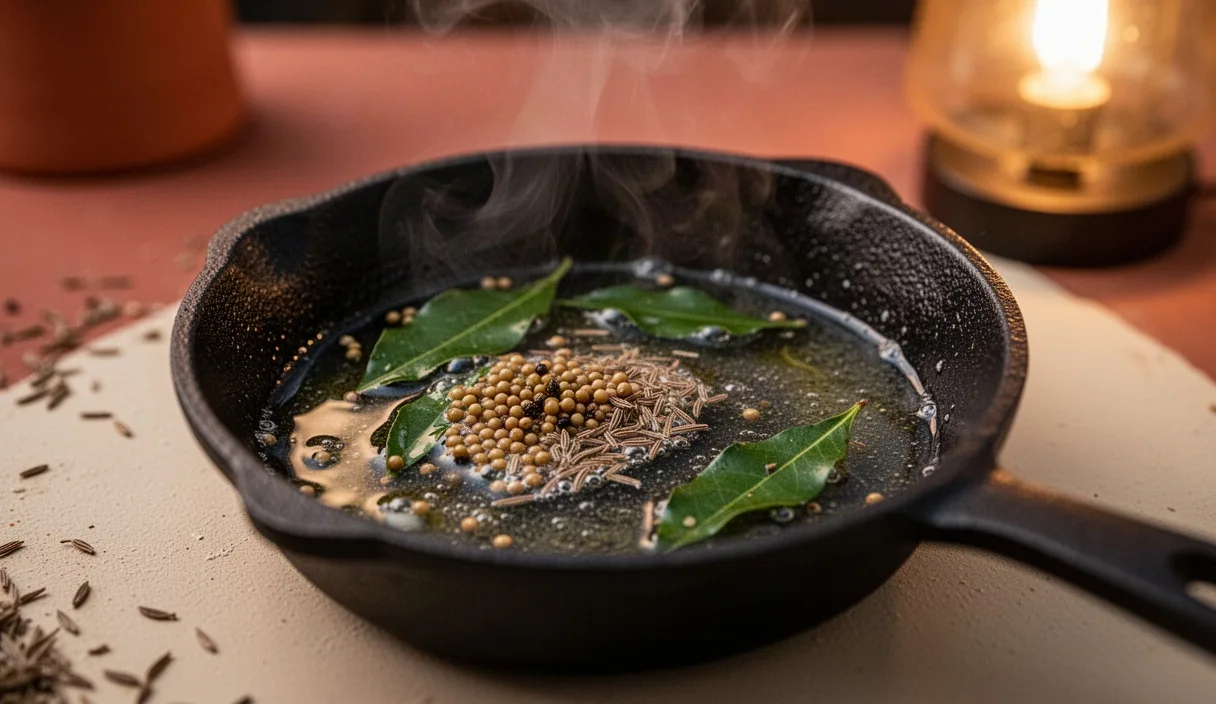

If you have ever dropped raw ground cumin into a simmering pot of lentils and wondered why the result tasted chalky rather than rich, the issue is not your spice rack. It is the physics of extraction. Indian kitchens address this problem through a foundational technique known variously as tadka, chaunk, vaghar, or baghar. At its core, blooming is the rapid application of hot fat to whole spices, extracting volatile aromatic compounds that water simply cannot dissolve.
The entire process takes between twenty seconds and two minutes, yet it dictates the base profile of a regional dish. Getting it right requires understanding how heat behaves inside different fats, how dense seed coats crack under pressure, and how to sequence ingredients so delicate aromatics do not carbonize while stubborn seeds are still waking up. Once you recognize the distinct crackle of black mustard seeds and the nutty aroma of toasted cumin, the technique becomes second nature.
The Chemistry of Fat-Soluble Spice Compounds
Whole spices house their aromatic identity inside essential oils shielded by fibrous plant tissue. Compounds such as cuminaldehyde in cumin seeds, anethole in fennel, and eugenol in cloves are hydrophobic. When spices are dropped into a water-based broth, these volatile molecules remain trapped within the cell walls or float poorly across the surface, never truly integrating into the liquid base. Water boils at 100 degrees Celsius, a threshold too low to trigger the pyrolytic reactions that create the complex, toasted flavor profiles associated with traditional curries.
Cooking oil and clarified butter, by contrast, can safely reach working temperatures between 160 and 190 degrees Celsius without evaporating. At these temperatures, the heat breaks down the cellulose walls of seeds and pods, allowing the volatile oils to migrate into the surrounding lipid matrix. The fat acts as an efficient solvent, capturing these flavor molecules and holding them in suspension throughout the finished sauce or daal.
Thermal degradation is the opposing risk. When volatile oils get too hot, typically past 205 degrees Celsius, their delicate mono- and sesquiterpenes break down into bitter, acrid byproducts. Black pepper loses its clean piperine bite and turns harshly burnt; coriander seeds surrender their bright floral notes and leave behind dry, charcoal-like bitterness. Precise temperature management ensures that the volatile oils leave the seed without degrading into carbon.
Selecting Fat: Ghee, Mustard Oil, or Neutral Vegetable Oil
The cooking medium does far more than transfer thermal energy. The fat provides its own chemical foundation and background flavor, influencing which spice compounds shine and which take a supporting role. Choosing the correct fat depends on the regional tradition of the dish and the thermal load required by your whole spice blend.
Ghee, or clarified butter, has had its water content boiled off and its milk solids strained out. This leaves behind a stable fat with a smoke point near 250 degrees Celsius. Ghee brings rich, buttery notes produced by short-chain fatty acids, making it the classic pairing for earthy legumes such as yellow moong or toor daal. Because ghee solidifies when chilled, it is best reserved for dishes eaten hot from the stove.
Mustard oil is the staple medium across Bengal, Bihar, and Kashmir. It contains allyl isothiocyanate, which gives raw mustard oil a sharp, pungent bite comparable to wasabi. In traditional applications, mustard oil is heated until it emits faint wisps of white smoke, reaching around 200 degrees Celsius, which mellows the sulfurous bite into a rounded, nutty flavor before the spices hit the pan. For quick weeknight preparations, neutral vegetable oils like peanut, sunflower, or avocado oil offer high smoke points and minimal flavor competition, letting delicate aromatics take center stage.
| Fat Type | Smoke Point | Flavor Profile | Best Applications |
|---|---|---|---|
| Ghee | 250°C (482°F) | Nutty, rich, rounded dairy finish | Toor daal, khichdi, rich tomato-based gravies |
| Raw Mustard Oil | 250°C (482°F) | Sharp, pungent, horseradish-like | Fish curries, braised leafy greens, potato curries |
| Peanut Oil | 232°C (450°F) | Mild, slightly sweet, earthy | Maharashtrian vegetable dishes, lentils, dry sautés |
| Sunflower Oil | 225°C (437°F) | Completely neutral, clean | Southern rasam, vegetable korma, delicate broths |
Sequence of Addition: From Hardy Seeds to Tender Leaves
Dumping an entire spice mix into hot oil all at once is the most common reason home cooks end up with bitter food. A dense cinnamon stick requires up to forty seconds to release its cinnamaldehyde into hot fat, whereas fresh curry leaves or minced garlic can burn to a cinder within five seconds. You must stagger additions based on density, water content, and thermal tolerance.
To sequence effectively, arrange your spices on a small plate in the order they will enter the pan. Group them into three clear tiers:
- Hard bark, pods, and dense seeds: Black mustard seeds, dried whole red chiles, cassia bark, green cardamom, black cardamom, and whole cloves. These enter the hot oil first, at roughly 180 degrees Celsius, giving their tough outer layers time to soften and crack.
- Medium seeds and aromatics: Cumin seeds, coriander seeds, fennel seeds, and thinly sliced ginger. These follow once the mustard seeds begin popping. Cumin contains delicate oils that darken from pale gold to dark brown in roughly ten seconds.
- Fresh leaves, powders, and fragile resins: Fresh curry leaves, fresh green chiles, asafoetida (hing), and ground spice powders such as turmeric or Kashmiri red chile powder. These enter last, often when the pan is already sliding off the burner.
Asafoetida warrants particular attention. Sold commercially as a powder cut with rice flour or gum arabic, it expands violently and can scorch within three seconds in oil above 175 degrees Celsius. Add asafoetida just after the cumin seeds brown, allowing it to foam for two seconds before incorporating liquid or lower-temperature ingredients.
Auditory and Visual Cues of a Finished Bloom
Timer apps are practically useless during a bloom because pan thickness, burner output, and ambient fat temperature create shifting variables. Instead, rely on clear sensory markers that signal each stage of the extraction process.
The first signal is auditory. Black mustard seeds expand as internal moisture turns to steam, causing their hulls to rupture. You will hear an aggressive, machine-gun crackle. If the seeds merely sink and slide silently across the pan, your oil was too cold, resulting in a bitter, raw flavor. If the seeds burst and instantly turn gray, your oil was far too hot.
The next cue is kinetic and visual. When cumin seeds enter the oil, small streams of bubbles should immediately encircle every seed. Over the course of eight to twelve seconds, cumin changes from pale green-brown to warm bronze, floating to the surface of the fat. Watch the pan closely during this window: cumin that looks golden in the pan can turn black from residual heat within fifteen seconds if left on the burner.
Finally, fresh elements provide moisture-driven cues. Adding fresh curry leaves or slit green chiles triggers an explosive sputtering as water hits the hot fat. The curry leaves will become translucent, stiff, and aromatic within four seconds. At that precise moment, the bloom is complete.
Integrating the Tempering into Legumes and Vegetables
Blooming is executed in two distinct culinary positions: at the start of cooking as a foundation, or at the conclusion as a finishing touch. The position you choose determines the aroma profile of the entire dish.
Foundational blooming happens in the primary cooking vessel. You heat oil, bloom your sturdy whole spices, and immediately follow with chopped onions, ginger, or pureed tomatoes. The water released by the onions drops the pan temperature instantly, halting the blooming process and creating a savory base that infuses every ingredient added later. This method works well for long-braised vegetable dishes, chickpea curries, and meat gravies.
Finishing blooms, often cooked in a small, curved pan called a tadka pan, are poured over fully cooked legumes right before serving. When hot fat meets a warm pot of cooked dal, it creates an intense sizzle. Cover the pot with a tight-fitting lid immediately after pouring the hot oil over the lentils. Keeping the lid closed for three to five minutes traps the volatile oils escaping in the steam, forcing them back down into the food rather than letting them drift out into the kitchen.
For dry vegetable stir-fries (known as sabzi or poriyal), the blooming process serves as the bridge between oil and vegetable. Pouring the bloomed mustard seeds, split urad dal, and curry leaves directly over blanched green beans or cabbage adds crunch alongside aromatic warmth.
Common Timing Mistakes and How to Avoid Overheating
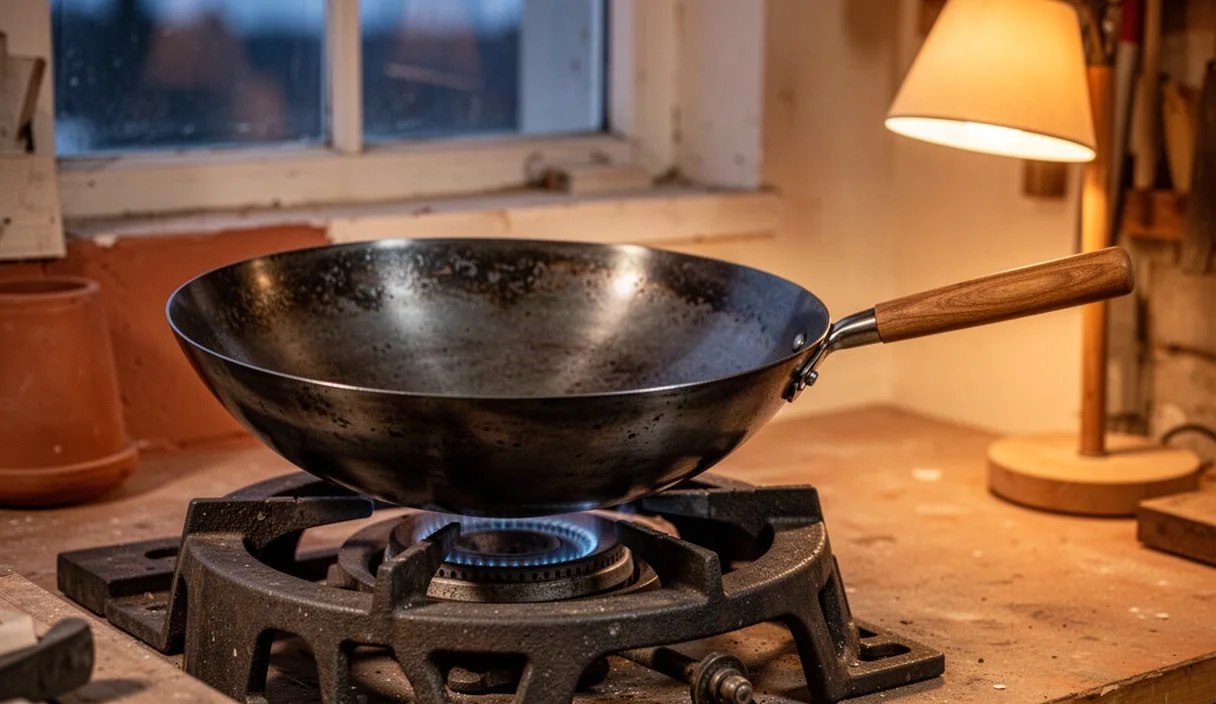
Most blooming failures happen because small amounts of oil respond very quickly to changes in heat. A standard small skillet holding two tablespoons of oil can jump from 150 to 220 degrees Celsius in under thirty seconds over high heat. Here is how to keep the process controlled and repeatable:
- Keep your ingredients measured and within reach: Do not search your pantry for cumin seeds while mustard seeds are popping in the pan. Have every spice pre-measured into small bowls next to your stovetop before turning on the flame.
- Move the pan off the burner to control temperature: If the fat starts smoking aggressively, lift the skillet three inches above the burner or set it on an unheated grate for ten seconds before adding spices.
- Use cold ingredients to stop cooking: If your cumin or garlic is darkening too quickly, dump in your chopped onions, pureed tomatoes, or cooked daal immediately. The moisture instantly drops the temperature of the oil below the burning point.
- Discard scorched batches: If your spices turn black and produce harsh, acrid smoke, do not attempt to mask the flavor with salt or acidic ingredients. Discard the burnt fat, wipe down the pan, and start again. Burnt whole spices will ruin an entire pot of food.
Practical Next Steps for Daily Cooking
The best way to build your confidence with blooming is to focus on a minimal, classic combination before tackling blends with seven or eight components. Begin with a simple test using two tablespoons of neutral oil, one teaspoon of whole cumin seeds, and a single clove of sliced garlic over medium-low heat.
Set a cold skillet on the stove, add your fat, and warm it gently. Drop two cumin seeds into the oil; when tiny bubbles gather around them, the temperature is right for the rest of the seeds. Add the remaining cumin, observe the color shift to light bronze over ten seconds, add the garlic, and slide the pan off the heat as the garlic turns pale gold. Pour this mixture over a plain bowl of salted white rice or boiled red lentils to taste the difference that proper fat extraction makes.
Once you are comfortable with this timing, introduce mustard seeds, dried chiles, and fresh curry leaves into your rotation. By watching the colors and listening for the crackle of the seeds, you will quickly learn to bloom whole spices with consistency and ease.