 Meridian Palate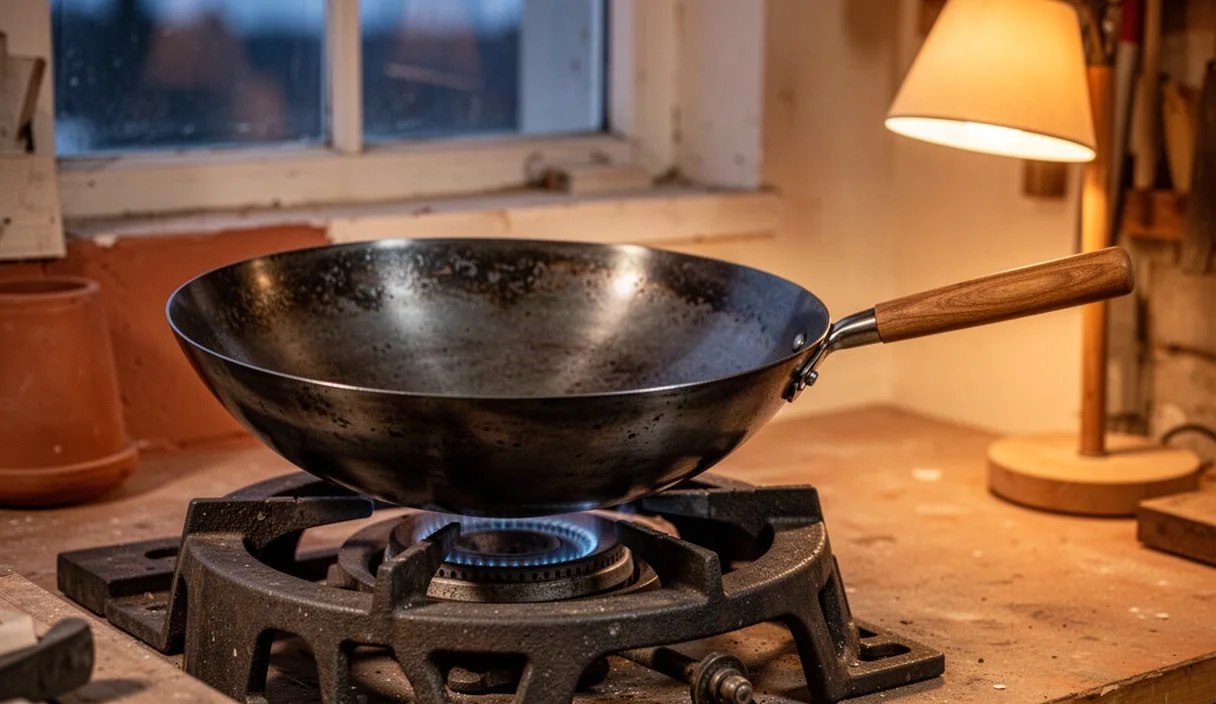

A new, unseasoned carbon steel wok looks more like industrial sheet metal than a classic cooking vessel. Straight out of the box, it arrives gray, cold, and coated in a thin shield of machine oil to fend off rust while sitting in cargo containers. Transforming this raw metal into a slick, glossy, naturally nonstick pan is one of the most rewarding rituals in home cooking, but it can feel slightly intimidating if you have only ever cooked on nonstick coatings or heavy enameled pans.
The seasoning process is practical chemistry rather than kitchen mysticism. By heating the steel until its crystalline structure shifts, and then bonding microscopic layers of carbonized fat to the metal surface, you build an organic barrier called patina. This surface protects the iron beneath from moisture while helping proteins release cleanly during high-heat stir-fries. With a home gas or electric burner, an inexpensive scrub brush, and a little patience, you can take a blank wok from bare metal to a seasoned pan ready for daily dinner duty.
Understanding Carbon Steel Heat Distribution
Carbon steel occupies an ideal middle ground between cast iron and stainless steel. It contains roughly 98 percent to 99 percent iron and 1 percent to 2 percent carbon. This composition allows manufacturers to press or hammer the metal into thin, lightweight sheets while retaining structural toughness. For home cooks, the gauge of the steel dictates how the wok absorbs and spreads heat across its curve.
Most quality home woks measure between 14-gauge (about 2.0 millimeters thick) and 16-gauge (about 1.5 millimeters thick). A 14-gauge wok retains heat well without becoming too heavy to toss with one wrist. A 16-gauge wok responds instantly to flame adjustments, heating up in seconds and cooling down just as rapidly when pulled off the fire. However, carbon steel has relatively low thermal conductivity compared to aluminum or copper. It creates a localized hot spot directly above your burner while keeping the sloping sides noticeably cooler.
This temperature gradient is deliberate. In traditional stir-frying, you sear protein in the blazing heat of the base, push it up the cooler perimeter to rest, fry aromatics in the center, and combine everything together before saucing. The table below outlines how carbon steel compares to other standard pan materials found in domestic kitchens.
| Material | Heat Retention | Responsiveness | Average Weight | Surface Reaction |
|---|---|---|---|---|
| 14-Gauge Carbon Steel | Moderate | Very Fast | 3 to 4 pounds | Forms natural fat patina |
| Cast Iron | Very High | Slow | 6 to 9 pounds | Forms natural fat patina |
| 3-Ply Clad Stainless | Moderate to High | Moderate | 3 to 5 pounds | Non-reactive, bare metal |
| Hard-Anodized Aluminum | Low to Moderate | Fast | 2 to 3 pounds | Synthetic nonstick coating |
Because the sides do not retain scorching temperatures on a home burner, your technique must adapt. You cannot expect a home cooktop to turn the entire perimeter of a 14-inch wok into an active sear plate. Instead, you use the bottom four inches of the bowl as your primary engine and the tall walls as your holding zone and splatter guard.
Removing Factory Protective Grease Safely
Before any cooking fat touches the metal, you must completely strip the factory coating. Manufacturers spray new woks with mineral oil, synthetic grease, or food-safe machine wax to prevent atmospheric humidity from causing rust during transit. Cooking over this preservative produces acrid fumes and prevents your seasoning oil from bonding directly with the iron pores.
This is the only time you should aggressively attack your carbon steel wok with dish detergent and an abrasive scouring pad. Prepare your sink with boiling water and a standard liquid dish soap that cuts heavy grease. Grab a stainless steel wool scrubber or a heavy-duty nylon scour pad. You will need considerable elbow grease for this task, so clear your counter space beforehand.
- Initial Rinse: Run very hot tap water over both the interior and exterior of the wok for two minutes to soften the protective wax layer.
- Heavy Scrub: Apply several drops of liquid dish soap directly onto your abrasive pad. Scrub the interior using tight, circular motions. Work from the bottom up to the rim.
- Exterior Cleaning: Repeat the scrubbing process across the exterior base and sides. Industrial grease on the bottom of the pan will burn and smoke on your burner if left behind.
- Rinse and Evaluate: Rinse the pan under hot water. If the water beads up anywhere on the steel, a waxy film remains. Dry the wok with a clean white paper towel. If the paper towel picks up gray or yellow residue, return the pan to the sink and scrub once more.
- Final Drying: Wipe the pan with a cotton towel and place it immediately on a medium burner for three minutes to evaporate every trace of surface water.
Do not leave the bare metal wok on the counter to air dry after this cleaning step. Raw carbon steel stripped of its protective oil can develop flash rust in less than fifteen minutes in a humid room.
The Blueing Stage on Standard Kitchen Burners
Once the bare steel is clean and dry, the metal must undergo heat treatment before receiving oil. This step is known as blueing. At temperatures around 550 to 600 degrees Fahrenheit, the silver surface undergoes oxidation, turning from bright steel to an iridescent shade of dark gunmetal blue. This thin layer of black iron oxide (magnetite) provides natural corrosion resistance and forms the structural base for the polymerized oil that follows.
Open your kitchen windows and turn your stove exhaust fan to its highest setting. Even with factory grease scrubbed away, the metal will release slight odors as it changes structure. If you have sensitive smoke detectors near your kitchen, alert your household, because you will be pushing the metal to high heat.
Place the dry, bare wok over the hottest burner on your stove. If you cook on gas, set the flame to maximum. Keep the wok stationary until the bottom turns from dull gray to dark blue, which usually takes between three and six minutes. Once the center shifts color, use the handle to tilt and roll the wok slowly so that the flame plays directly against the sloping sides. Work methodically around the entire circumference. Gas flames make this relatively simple, as you can tilt the bowl at steep angles directly over the fire.
If you use an electric coil or flat induction cooktop, the process requires patience. Electric burners only transfer significant heat to the flat base of the pan. For the curved sides, hold the wok at an angle against the hot coil for several minutes per quadrant. If your cooktop cannot reach the heat required to change the color of the upper walls, do not force it or risk cracking a glass-ceramic surface. You can blue the bottom on the glass cooktop, or you can place the entire bare wok in a home oven set to 500 degrees Fahrenheit for 45 minutes, provided the handle is solid steel or unbolted wood.
Applying Micro-Layers of Neutral Fat
With the metal blued, the wok is ready for seasoning. Seasoning is not simply coating metal in oil; it is the chemical process of polymerization. Liquid fat subjected to high heat breaks down into free fatty acids, cross-links into a tough plastic-like matrix, and embeds itself within the microscopic pores of the carbon steel. Thinner applications produce harder, smoother films, whereas thick layers turn into sticky, gummy sludge.
Choose an oil with a high smoke point and a high concentration of unsaturated fats, which polymerize much faster than saturated fats. Refined peanut oil, grapeseed oil, canola oil, and refined sunflower oil work exceptionally well. Pure lard also works reliably due to traditional practice, though neutral plant oils yield a cleaner initial layer. Avoid extra virgin olive oil, unrefined sesame oil, butter, and flaxseed oil. Flaxseed oil builds an initial glaze quickly, but it becomes brittle and flakes off carbon steel under aggressive stir-frying.
The secret to successful seasoning lies in applying an impossibly thin layer of fat. The following sequence guarantees a solid foundation:
- Temperature Adjustment: Lower the burner under your blued wok to medium-low. Let the pan sit for one minute so the intense heat stabilizes around 425 to 450 degrees Fahrenheit.
- Oil Application: Pour half a teaspoon of your chosen oil into the center of the pan. Using a folded wad of paper towels held securely with metal tongs, rub the oil rapidly across the entire interior and exterior of the bowl.
- The Wipe-Off: Take a second, completely dry wad of paper towels and wipe the pan again vigorously, as if you made an error and are trying to remove every trace of fat. The goal is to leave only a microscopic film clinging to the steel.
- Bake the Layer: Raise the burner heat back to medium-high. Watch the surface carefully. Within thirty seconds, the sheen of oil will begin to smoke lightly. Keep heating the pan until the visible smoking stops and the surface turns from glossy to a matte dark bronze or charcoal finish.
- Repeat: Lower the heat slightly, apply another half-teaspoon of oil, wipe it nearly completely dry, and smoke it off again. Completing this cycle three times creates a durable, slick foundation that is ready for light cooking.
Post-Cooking Cleanup Without Detergents
Once your patina has formed, day-to-day cleaning is remarkably fast. Modern dish soaps contain powerful surfactants designed to break down oils, and while an accidental splash of soap will not ruin a mature patina, repeated washing with detergent will strip the fragile early layers you just worked to build.
Clean the wok while it is still warm from cooking. If you let food dry and crust overnight, removing it requires abrasive action that can damage your hard-won patina. Run hot tap water directly into the warm wok. Never drop a scorching hot wok directly into a sink full of freezing cold water, as thermal shock can warp the thin steel bottom, turning a flat-bottomed wok into an unsteady rocker on your stove.
Use a traditional split-bamboo cleaning whisk or a stiff natural-fiber brush (such as a Japanese tawashi brush). These tools possess enough stiffness to dislodge caramelized starch and charred sauce without scratching through the underlying polymerized oil. Swirl hot water and scrub with the brush until the metal feels smooth under your fingers. Avoid metal scourers, harsh nylon scrubbing pads, and chemical oven cleaners entirely.
After scrubbing, pour out the dirty water and rinse the wok with fresh hot water. Wipe the bulk of the moisture away with a dedicated kitchen towel. Return the wok to a low burner for two minutes until all microscopic moisture beads evaporate completely. Turn off the heat, add two drops of cooking oil to the warm metal, and buff it thoroughly with a paper towel before hanging the pan on a rack. Storing a wok with this microscopic oil barrier prevents atmospheric rust between meals.
Fixing Sticky Surfaces and Surface Rust Spots
Every home cook eventually makes an error with carbon steel. You might apply too much oil during seasoning, or someone might leave the pan soaking in the sink while you are out of the room. Fortunately, carbon steel is almost impossible to ruin permanently. Unless the pan cracks through blunt physical force, any surface flaw can be repaired in your kitchen.
If your wok feels tacky, gummy, or shows patchy orange peel textures, you used too much fat during the seasoning cycle. The oil pool was too deep to cross-link properly, resulting in semi-hardened grease rather than a clean polymer. Do not try to cook over this gum; food will adhere to it immediately. To resolve this, place the wok over high heat and let it smoke until the sticky patches bake into dry carbon, then let it cool slightly and scrub the affected area with coarse kosher salt and a dry paper towel. The abrasive salt crystals shear away the gummy ridges without damaging the steel underneath.
Surface rust appears as orange dust or rough red spots when moisture sits on unseasoned or stripped metal. To eliminate surface rust, follow this simple process:
- Acid Treatment: Soak a small cloth in standard 5 percent white vinegar and rub the rusted spots directly. The mild acetic acid dissolves iron oxide without damaging sound metal.
- Scrub Flat: Use a fine scouring sponge to scrub away the loosened rust particles until you see clean, silver-gray metal beneath.
- Neutralize: Rinse thoroughly with hot tap water and a drop of soap to halt the acid reaction, then dry immediately over a burner flame.
- Spot Seasoning: Treat the scrubbed zone as you did when the pan was brand new. Heat the bare spot until it darkens, then apply a tiny drop of oil and buff it until it smokes off cleanly.
If the wok suffers catastrophic rust covering the entire body, or if structural pitting eats deep into the metal, consulting a professional metal refinisher or replacing the vessel may be more economical than manual restoration. For ordinary surface blooms, twenty minutes of kitchen triage will restore your pan completely.
Common Mistakes
The path to an enduring patina is simple, yet home cooks frequently stumble over a few predictable habits. Being mindful of these pitfalls keeps your wok in peak working order.
Cooking acidic ingredients too early is the most frequent setback. Vinegar, fresh tomatoes, tamarind paste, wine, and citrus juices will strip young patinas rapidly. Wait until your wok has been used for twenty or thirty stir-fries and shows a deep black, glossy interior before introducing braises containing vinegar or tomato sauces.
Another common mistake is confusing preheating with seasoning. Many cooks heat their wok dry, dump cold oil into the bottom, and drop cold protein into the pool immediately. The correct technique for carbon steel is the traditional hot wok, cold oil approach. Heat the dry pan until a drop of water vaporizes instantly, swirl your cooking oil around the sides just before cooking, and add the food immediately afterward. This creates an immediate steam barrier that keeps meat from binding to the metal.
Finally, avoid storing the wok in enclosed, unventilated cabinets if your home experiences high humidity. Hanging the wok from a hook or resting it on an open pot rack allows continuous air circulation, keeping moisture from settling in the bottom of the bowl.
Practical Next Steps
Your wok is seasoned, dry, and lightly buffed with oil. Now comes the most effective part of the entire process: cooking regularly. A patina is not a permanent fixture that remains pristine; it is a working surface that grows thicker, sheds small flakes, and repairs itself through daily contact with high heat and cooking fats.
For your inaugural cook, perform a traditional seasoning run using aromatic scraps. Place the seasoned wok over medium-high heat, add two tablespoons of high-smoke oil, and toss in a generous bunch of sliced scallions, chives, and crushed unpeeled ginger. Move the aromatics around the entire surface of the pan using your spatula for ten minutes, pushing them high up the sides. While this step smells wonderful, do not eat these scorched scraps. Discard them, rinse the wok under hot water, dry it over low heat, and wipe it down.
For the first two weeks of use, focus on fat-friendly cooking methods: pan-frying dumplings, flash-frying greens with garlic, or searing marinated chicken slices. Every time you cook with hot oil, you lay down another microscopic layer of carbonized fat. Within a month of regular weeknight use, the mottled bronze surface will give way to a jet-black, satin-smooth finish that rivals synthetic nonstick pans while enduring for decades to come.