 Meridian Palate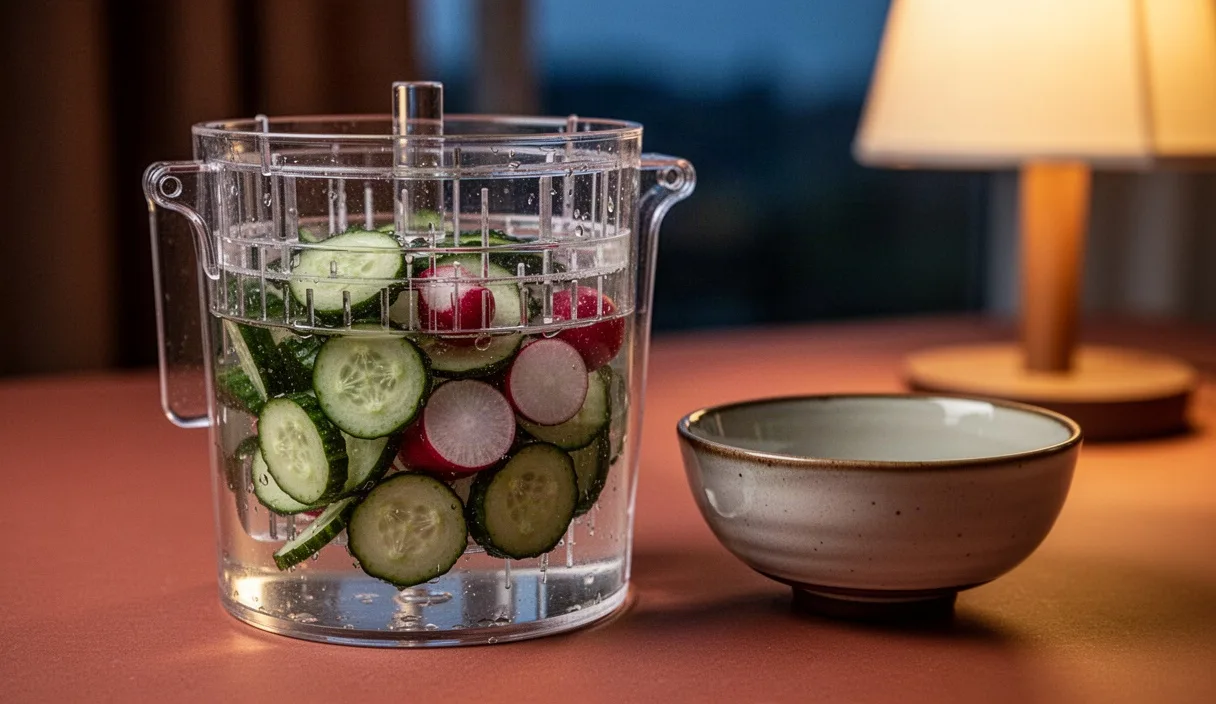

Walk through a food hall in Kyoto or Tokyo, and you will encounter counters piled with wooden barrels, polished earthenware, and vibrant trays of preserved roots and leaves. These are tsukemono, Japanese pickled vegetables. While Western pickling often relies on heavy vinegar brines or weeks of lacto-fermentation, the Japanese approach frequently treats pickling as an extension of daily food preparation, designed to be eaten within hours or a few days of preparation.
Home tsukemono requires very little specialized equipment. With a sharp knife, sea salt, clean tap water, and a simple way to weigh down sliced vegetables, you can transform ordinary market produce into crisp, balanced side dishes. The process preserves the natural sweetness and color of the garden while introducing savory depths through salt, kelp, and gentle acid.
The Role of Pickles in Japanese Meal Architecture
In traditional Japanese dining, meals are arranged around the principle of ichiju-sansai, which translates to one soup and three dishes, served alongside a bowl of plain steamed rice. Within this structure, tsukemono does not count as one of the three main dishes. Instead, it occupies an essential secondary position alongside the rice and soup, acting as a functional bridge between courses.
Plain Japanese short-grain rice contains no butter, salt, or seasoning. Tsukemono provides the salinity and acidity needed to make each mouthful of starch lively. Between bites of oily grilled mackerel or rich simmered pork, a slice of pickled radish cleanses the tongue, cutting through animal fats with sharp textural crunch.
Beyond texture, tsukemono introduces umami and earthiness without competing against the centerpiece. Pickles prepared with kombu, shaved bonito, or citrus peel echo the seasoning notes found in the soup broth and sauces. Far from an afterthought, they maintain balance across the entire meal tray, preventing the palate from tiring halfway through dinner.
Quick Salt-Pickling: The Shiozuke Method
The simplest and most common tsukemono style made in home kitchens is shiozuke, or salt-pickling. It relies on a straightforward mechanical action: salt draws moisture out of plant cells through osmosis, softening tough fibers while concentrating natural sugars and retaining raw crunch.
Success depends on measuring your salt by weight rather than volume. Kosher salt, table salt, and sea salt vary wildly in crystal density, meaning a tablespoon of one can weigh twice as much as another. A dependable baseline for shiozuke is 2 percent salt calculated against the prepared weight of the vegetables. If you have 300 grams of sliced cucumber, measure out exactly 6 grams of fine sea salt.
- Weigh your trimmed, sliced vegetables in grams using a digital kitchen scale.
- Multiply that weight by 0.02 to determine the target salt amount.
- Place the produce in a clean bowl or food-grade plastic bag, sprinkle the salt evenly across the surface, and massage gently for 60 seconds until the vegetables look glossy and droplets form.
- Allow the mixture to rest under pressure for 30 to 90 minutes at cool room temperature.
- Pour off the pooled liquid, squeeze the vegetables firmly in your hands to extract excess water, and transfer them to a clean serving dish.
For additional savoriness, tuck a two-inch strip of dried kombu or a few slices of fresh red chili pepper into the bag alongside the salt. The kelp softens as it absorbs the expelled vegetable juices, releasing glutamates into the brine and coating the vegetables with delicate umami.
Using Weight: Mechanical Pressure versus Brine Soaking
Western quick pickles usually submerge vegetables in a seasoned liquid bath to carry flavors inward. In contrast, Japanese methods often rely on mechanical pressure, called omishi, to force internal water out while compacting cell walls into a dense, snappy texture. This distinction creates a bite that is crisp rather than waterlogged.
Modern Japanese homes often use a tsukemonoki, an acrylic container equipped with an internal screw plate. Turning the lid handle drives the flat press down against the vegetables, generating sustained, adjustable force in a compact refrigerator footprint. However, traditional drop-weights work just as effectively.
| Pressing Method | Force Control | Best Produce Types | Typical Press Time |
|---|---|---|---|
| Screw-Press Container | High, easily tightened as volume decreases | Hard roots, shredded cabbage, dense cucumbers | 45 to 90 minutes |
| Flat Plate with Canned Goods | Moderate, steady downward gravity | Tender leafy greens, sliced summer squash | 2 to 4 hours |
| Zipper Bag Pressed by Heavy Skillet | Firm, distributed over wide surface area | Coin-sliced daikon, halved baby turnips | 1 to 2 hours |
| Light Hand Massage Only | Gentle, rely mostly on ambient osmosis | Delicate herbs, thin cucumber ribbons | 15 to 30 minutes |
When applying physical weights, aim for a load roughly equal to or double the weight of the raw vegetables. If pressing 400 grams of chopped napa cabbage, a flat plate topped with an 800-gram bag of dried beans or a canned good provides sufficient downforce to extract water without pulverizing delicate leaves.
Amazu Pickling with Rice Vinegar and Light Sweetness
While salt-pickling emphasizes pure vegetable flavor, amazu-zuke introduces bright acidity and gentle sweetness. Amazu translates to sweet vinegar. It is the classic pickling medium for ginger slices served with sushi, but it also works wonderfully with crunchy roots and summer vegetables.
A standard home ratio uses 3 parts unseasoned rice vinegar, 2 parts warm water, and 1 part granulated sugar, seasoned with roughly 0.2 parts salt. For example, combine 90 milliliters of rice vinegar, 60 milliliters of warm water, 30 grams of sugar, and 6 grams of fine salt. Stir until the crystals dissolve completely. Avoid boiling the vinegar if you wish to retain its fresh, clean aroma.
Vegetables destined for amazu benefit from a two-stage curing process:
- Stage One: Salt the sliced vegetables lightly at 1.5 percent by weight and let them rest under light pressure for 20 minutes. Squeeze thoroughly to expel watery sap. This step prevents the sweet vinegar from becoming diluted.
- Stage Two: Submerge the squeezed vegetables directly in the prepared amazu liquid. Chill in the refrigerator for at least two hours before eating.
This method works especially well with thin rounds of red-skinned turnip or lotus root. In the presence of vinegar, the red skins release natural pigments that tint the entire turnip flesh an appealing soft pink.
Choosing Vegetables: Radish, Cabbage, and Turnip Suitability
Not every vegetable responds identically to pressure and salt. The thickness of cell walls, internal moisture ratios, and natural bitterness determine which preparation method yields the best texture.
Daikon Radish: Daikon contains significant water and holds its bite exceptionally well. Cut it into coins for short salt-pressings, or slice it into half-moons for amazu. Because the outer layer can be fibrous and peppery, peel the exterior three millimeters deeply before slicing. Use the sweet upper third of the radish near the leaves for raw pickles, reserving the more pungent bottom tip for braises and soups.
Napa Cabbage (Hakusai): This cabbage has thick, juicy ribs and tender ruffled leaves. Cut both leaf and stem into two-inch squares, salt at 2 percent, and add slivers of fresh ginger and dried yuzu peel. Press firmly for two hours. The thick white ribs soften into translucent, crunchy tiles that carry salt and citrus evenly.
Small White Turnips (Kabu): Japanese turnips are naturally tender and sweet, lacking the harsh sulfur notes sometimes found in large Western varieties. You do not need to peel young turnips; simply wash the skin, trim the taproot, and slice them into sixths through the stem end. Salt lightly or pickle in sweet vinegar for 3 hours. If clean turnip greens are attached, chop them into small pieces and pickle them alongside the roots for color contrast.
Cucumbers: Thin-skinned varieties like Japanese, Persian, or English cucumbers perform best. Standard wax-coated slicing cucumbers contain excessive seeds and watery seed cavities that turn mushy quickly. Slice them thinly on a bias, or salt whole small cucumbers under pressure for a day to create firm whole pickles.
Serving Etiquette and Daily Storage Tips
Tsukemono is served in small, dedicated dishes called kozara. A typical single portion consists of three to five small slices, neatly stacked or fanned out. In Japanese table presentation, piling pickles haphazardly into a large central mound is unusual; modest, curated arrangements acknowledge the potency of the salt and vinegar.
Before serving shiozuke, taste a test slice. If the vegetable tastes too salty because it sat in its pressed brine too long, rinse it briefly in cold water and squeeze dry with paper towels. You want a bright, clean salt snap rather than an overwhelming sodium hit. Garnish the plate with a drop of soy sauce, a pinch of toasted white sesame seeds, or a trace of finely shredded ginger.
Because home-style quick pickles rely on low salt levels and omit commercial preservatives, treat them as perishable produce rather than shelf-stable pantry goods:
- Store all finished pickles in airtight glass or ceramic containers in the refrigerator at or below 4 degrees Celsius.
- Always extract portions with clean, dry chopsticks or utensils. Using fingers or previously used cutlery introduces wild yeasts and bacteria that cause premature spoilage.
- Consume simple shiozuke within 48 to 72 hours for optimal crispness. Amazu-cured roots will keep safely for up to 7 days, though their texture gradually softens after the fourth day.
If you notice cloudy surface films, unexpected bubbling, or an off-putting sour odor in non-fermented quick pickles, discard the batch. Safe home food preservation begins with clean hands, clean cutting boards, and prompt refrigeration.
Common Mistakes to Avoid
Estimating salt by sight: Guessing salt quantities is the fastest route to ruined pickles. Under-salting fails to draw adequate moisture, leaving vegetables rubbery rather than crisp. Over-salting masks vegetable flavor and requires aggressive rinsing that washes away all delicate aromatics.
Neglecting the final squeeze: After pressing vegetables, moisture pools at the bottom of the container. If you simply drain this liquid without hand-squeezing the produce, excess water clings to the leaves and dilutes the crunch. Pick up small handfuls and squeeze firmly over the sink until dripping stops.
Cutting uneven slices: A mandoline or careful knife work ensures consistent thickness. If cabbage ribs or turnip slices vary between two millimeters and eight millimeters, the thin slices will end up limp and overly salty while the thick slices remain raw and unseasoned.
Leaving pickles at room temperature: Quick tsukemono is not a warm ferment like kimchi or sauerkraut. Pressing can occur on the counter for the first hour if the room is cool, but prolonged holding must happen in the refrigerator to prevent unintended bacterial growth.
Next Steps for Your Kitchen
The best way to develop an instinct for tsukemono is to start with a single cucumber and your kitchen scale. Slice two small cucumbers into quarter-inch discs, weigh them, calculate 2 percent of fine sea salt, and toss them together in a clean bowl. Set a small plate directly on top of the cucumber slices and weight it with a full 15-ounce can of tomatoes.
After forty minutes, squeeze the slices out, scatter a few sesame seeds over the top, and taste. Once you experience how clean pressure and measured salt transform ordinary produce into a structured, crackling side dish, you can comfortably explore ginger, dried kelp, and sweet vinegar variations across your favorite seasonal vegetables.